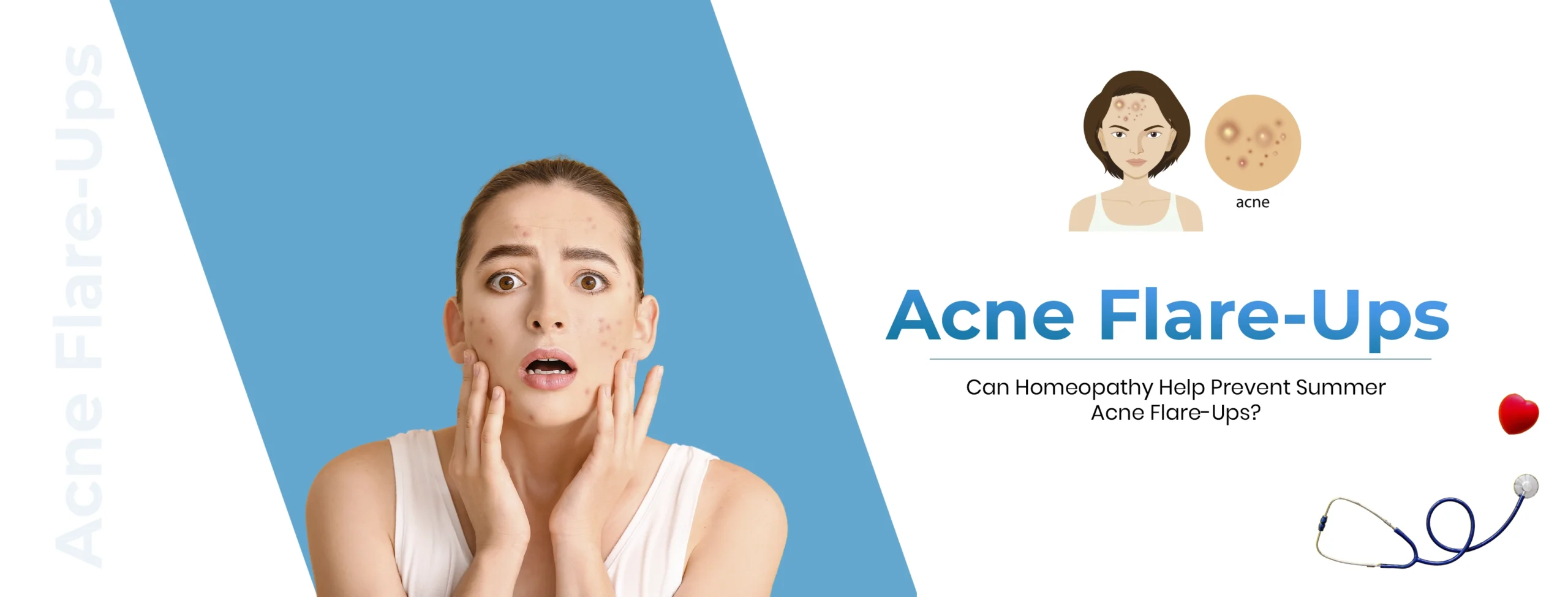
Summer is one of the most common times for acne to worsen. Patients who manage their skin reasonably well through the rest of the year often find that June, July, and August bring a fresh wave of breakouts on the face, along the jawline, on the back, and across the chest. It is frustrating, and it is not random.
Understanding the factors that trigger summer acne is an important first step toward managing it effectively.
Many people explore homeopathy as part of their approach to supporting skin health and managing recurring acne concerns. In this guide, we will discuss the common causes of summer acne flare-ups, practical skin care and prevention tips, and the role homeopathy may play as part of an individualised approach to acne management.
Why Does Acne Get Worse in Summer?
Many people notice that their acne becomes more difficult to manage during the summer months. Hot weather, increased sweating, sun exposure, and changes in daily habits can all contribute to more frequent breakouts.
Sweat and Excess Oil
During summer, the skin naturally produces more oil and sweat. When sweat mixes with oil, sunscreen, dirt, and dead skin cells, pores can become clogged more easily. This can lead to whiteheads, blackheads, and pimples.
Areas such as the forehead, nose, chin, chest, and back are especially prone to breakouts because they contain more oil glands and tend to sweat more.
Hormonal Changes
Hormones can also play a role in summer acne flare-ups. Factors such as heat, stress, and lifestyle changes may influence oil production in some individuals, making acne more likely to develop or worsen.
This is often more noticeable in teenagers and people who already experience hormonal acne, particularly around the jawline and chin.
Sun Exposure
While sunlight may seem to dry out pimples temporarily, excessive sun exposure can sometimes irritate the skin and contribute to inflammation. It can also make post-acne marks and pigmentation more noticeable.
Using a lightweight, non-comedogenic sunscreen can help protect the skin without increasing the risk of clogged pores.
Diet and Lifestyle Habits
Summer often brings changes in eating habits. Sugary drinks, processed snacks, fried foods, and other high-sugar foods may contribute to breakouts in some people. Staying hydrated and following a balanced diet rich in fruits, vegetables, and whole foods may support overall skin health.
Certain individuals also notice that specific foods seem to trigger their acne. Keeping track of these patterns can help you better understand what affects your skin.
How Homeopathy Approaches Summer Acne
Homeopathy does not treat acne as a skin-surface problem. It approaches it as a reflection of internal imbalance, hormonal, digestive, inflammatory, that is expressing itself through the skin. This is why homeopathic treatment for acne goes well beyond topical application and targets the systemic factors that make certain individuals prone to breakouts in the first place.
At Dr. Care Homeopathy, acne consultations are designed to look beyond the visible breakouts alone. Doctors assess factors such as the type and location of acne, possible triggers, seasonal patterns, medical history, lifestyle habits, diet, sleep, stress levels, and overall health before recommending a personalised treatment plan.
Because homeopathy follows an individualised approach, treatment recommendations may differ from one person to another, even when their acne appears similar. This personalised style of care is a key principle of homeopathic practice and is one of the reasons many people choose to explore homeopathy as part of their broader approach to managing recurring acne concerns. As with any skin condition, treatment decisions should always be made in consultation with a qualified healthcare professional.
Homeopathic Remedies Commonly Used for Acne
Important: The choice of remedy depends on the individual’s symptoms, skin type, medical history, and overall health profile. Homeopathic medicines should only be taken under the guidance of a qualified homeopathic doctor. Self-medication is not recommended.
Sulphur
Sulphur is commonly discussed in homeopathic practice for people with oily skin and recurring acne. It may be considered when breakouts are accompanied by skin irritation, itching, or discomfort that tends to worsen in hot weather.
Pulsatilla
Pulsatilla is often associated with acne that appears to fluctuate, particularly around hormonal changes. It is commonly considered in teenagers and women whose breakouts seem to follow a recurring pattern.
Kali Bromatum
Kali Bromatum may be considered for deeper, more persistent acne that affects areas such as the face, chest, or shoulders. It is often discussed when breakouts are slow to clear and may leave marks behind.
Silicea
Silicea is commonly associated with stubborn or recurring acne that develops beneath the skin and takes time to resolve. It may be considered when breakouts heal slowly.
Natrum Muriaticum
This remedy is often discussed for people with oily skin, sun sensitivity, or a tendency to develop dark marks after acne heals. It may also be considered when acne worsens during periods of stress.
Berberis Aquifolium
Berberis Aquifolium is commonly associated with acne accompanied by uneven skin tone, post-acne marks, or a dull complexion. It is frequently discussed in homeopathic skincare support.
Hepar Sulphuris Calcareum
This remedy may be considered when acne lesions are particularly painful, tender, or prone to forming pus. It is often associated with inflamed breakouts that feel sensitive to touch.
Calcarea Sulphurica
Calcarea Sulphurica is commonly discussed for acne that is slow to heal or produces recurring pus-filled spots. It may be considered as part of an individualised treatment plan.
Calendula
Calendula is often used in topical homeopathic preparations designed to support general skin care and comfort. It is commonly included in creams or lotions intended for irritated or blemish-prone skin.
Summer Skin Care Routine for Acne-Prone Skin
The right daily skin care routine significantly influences how acne behaves in summer. Some gentle summer skin care tips for acne-prone skin include:
Cleanse gently, twice a day
Use a gentle, soap-free, pH-balanced cleanser morning and evening. Avoid harsh scrubs or high-friction washing, both strip the skin and trigger a rebound increase in oil production. Washing more than twice daily is counterproductive.
Choose non-comedogenic products
In summer, switch every product that touches your face, including moisturiser, sunscreen, foundation, to a labelled non-comedogenic (non-pore-blocking) formulation. Gel-based and water-based products suit oily, acne-prone skin far better than cream or oil-based ones in hot weather.
Sunscreen is non-negotiable, but choose correctly
UV exposure worsens acne in the medium and long term, and post-acne pigmentation is directly increased by unprotected sun exposure. Use a lightweight, non-comedogenic, broad-spectrum SPF 30 or higher. Mineral sunscreens (zinc oxide, titanium dioxide) tend to be better tolerated by acne-prone skin than chemical filters.
Change and wash pillowcases frequently
In summer, sweat and sebum transfer to pillowcases every night. Unwashed pillowcases become a reservoir of bacteria and oil that re-contacts the skin for eight hours nightly. Changing pillowcases two to three times per week in summer is a straightforward habit with meaningful impact.
Keep hair off the face
Hair products, natural scalp oils, and sweat from the hairline all contribute to forehead and temple acne in summer. Tying hair back during sleep and in heat reduces this transfer.
Avoid touching your face
Hands carry bacteria and environmental contamination that transfer directly to pores. During the summer time, when the skin is more vulnerable, and pores are more open from heat, this habit has a disproportionate impact.
Foods to Limit or Avoid During Summer
Sugary Foods and Drinks
Foods and drinks high in sugar, such as soft drinks, packaged juices, sweets, ice cream, biscuits, and processed snacks, may contribute to breakouts in some people. If you notice your skin worsening after consuming these foods, reducing them may help support overall skin health.
Fried and Oily Foods
Fried snacks, fast food, and heavily oily meals can sometimes leave people feeling sluggish and may contribute to skin concerns. During summer, choosing lighter meals can help you feel more comfortable and support your overall well-being.
Excess Dairy
Some people find that their acne seems to worsen when they consume large amounts of dairy products such as milk, ice cream, or cheese. This does not happen to everyone, but it may be worth paying attention to any patterns between your diet and your skin.
Very Spicy Foods
Spicy foods do not cause acne directly, but they may trigger flushing, sweating, and skin irritation in some individuals. If you find that spicy meals seem to aggravate your skin, consider reducing them during periods of frequent breakouts.
Foods That May Support Healthy Skin
Fresh Fruits and Vegetables
Water-rich fruits and vegetables such as cucumber, watermelon, muskmelon, tomatoes, and leafy greens can be a refreshing addition to your summer diet. They also help support hydration and provide important nutrients.
Whole Grains and Balanced Meals
Whole grains, pulses, legumes, and balanced home-cooked meals can help provide steady energy throughout the day. A well-balanced diet supports overall health, including skin health.
Curd and Fermented Foods
Curd and other fermented foods can be enjoyed in moderation as part of a balanced diet. Many people include them in their summer meals because they are light, refreshing, and easy to digest.
Stay Hydrated
Drinking enough water is one of the simplest ways to support your body during hot weather. Aim to stay hydrated throughout the day, especially if you spend time outdoors or sweat heavily. Coconut water and other unsweetened fluids can also help you stay refreshed during summer.
In Conclusion
Summer acne flare-ups are often influenced by a combination of factors, including increased sweating, excess oil production, sun exposure, lifestyle habits, and individual skin sensitivity. While no single solution works for everyone, a consistent skincare routine, healthy dietary choices, proper hydration, and understanding your personal triggers can go a long way in supporting clearer skin during the hotter months.
If you are looking to explore a personalised homeopathic approach for recurring summer acne or seasonal skin concerns, Dr. Care Homeopathy offers individual consultations tailored to your symptoms, health history, and lifestyle factors. With more than 25 years of clinical experience and thousands of patients served, Dr. Care Homeopathy provides both in-clinic and online consultations to help you better understand your skin concerns and explore suitable treatment options under the guidance of qualified homeopathic doctors.
FAQ
Does homeopathy help with hormonal acne?
Homeopathy is commonly used as a complementary approach for people with hormonal acne. Treatment is individualised and should be prescribed by a qualified homeopathic doctor after a proper assessment.
How long does homeopathic treatment for acne take?
The response time varies from person to person. Factors such as the severity of acne, how long it has been present, and individual health factors can influence treatment duration.
Can teenagers use homeopathy for summer acne?
Yes. Homeopathy is commonly used for acne in teenagers. However, treatment should always be guided by a qualified homeopathic doctor.
Can I take homeopathy alongside acne medications?
In many cases, yes. But always inform your healthcare providers about all medications and treatments you are using and follow their recommendations.
Is sunscreen good for acne-prone skin?
Yes. Using a lightweight, non-comedogenic sunscreen can help protect acne-prone skin from sun damage and reduce the risk of post-acne pigmentation.
Can diet changes reduce acne flare-ups?
Diet may influence acne in some individuals. Reducing foods that appear to trigger breakouts and maintaining a balanced diet may help support overall skin health.
Does sweating cause acne?
Sweat does not directly cause acne. However, sweat mixed with oil, dirt, and dead skin cells can contribute to clogged pores and breakouts.
How does Dr. Care Homeopathy treat acne?
Dr. Care Homeopathy takes an individualised approach, considering factors such as symptoms, medical history, lifestyle, and overall health before recommending a personalised treatment plan.
How to Remove Summer Pimples?
To help manage summer pimples, cleanse your face twice daily with a gentle cleanser, use non-comedogenic skincare products, stay hydrated, avoid excessive sun exposure, and follow a balanced diet. Since sweat, excess oil, and clogged pores are common summer acne triggers, keeping the skin clean and avoiding heavy skincare products can help reduce breakouts. If acne is persistent or recurring, consult a qualified healthcare professional for personalised treatment advice.