Scleroderma Treatment with Homeopathy: Safe, Natural, and Personalized Care
Scleroderma is a long-lasting and rare autoimmune condition. It primarily causes the skin to harden and tighten. In some people, it can also affect the blood vessels, digestive system, and internal organs.
While hearing you have scleroderma can be worrying, many people can manage it well. To manage scleroderma, it is important to seek the right care. There are different forms of scleroderma. Some types affect only the skin, while others may also involve internal organs. Although there is no complete cure, treatments can help ease symptoms and slow the progression of the disease.
Today, alongside conventional treatments, many people are also choosing holistic approaches like homeopathy for scleroderma. This is because homeopathy is gentle and treats the body as a whole.
Let’s understand what scleroderma is and how homeopathy for scleroderma helps.

What is scleroderma?
Scleroderma, in simple words means “hard skin”. It is an autoimmune condition. In scleroderma, the immune system attacks the body’s tissues. As a result, the body makes excessive amounts of collagen.
Collagen is a kind of protein needed for healthy skin and tissues. Excessive collagen causes the skin to become thick and tight. Scleroderma is a group of diseases. Localized scleroderma shows its effect only on the skin, while systemic scleroderma. On the other hand, systemic scleroderma can also involve blood vessels and internal organs. As scleroderma is also a rheumatic condition, it may also cause joint and tissue pain.
What are the types of Sclerodermas?
Scleroderma is mainly classified into two broad types. These types are based on which parts of the body are affected and how widespread the condition is.
Localized scleroderma: This usually affects only the skin. It causes hard, waxy patches or streaks on the skin. Localized scleroderma is further divided into two types:
- Morphea: It leads to oval or round patches of thickened skin.
- Linear scleroderma: It appears as lines or bands, often on the arms, legs, or face.
This type of scleroderma usually does not affect internal organs and may improve over time.
Systemic scleroderma: This type is also called systemic sclerosis. It can affect the skin and internal organs such as the lungs, heart, kidneys, and digestive system.
- Limited cutaneous systemic sclerosis: It develops slowly and often involves the face, hands, and feet.
- Diffuse cutaneous systemic sclerosis: It progresses faster and affects larger areas of skin and multiple organs.
Although systemic forms can be more serious, early diagnosis and proper care can help manage symptoms and reduce complications.
What Causes Scleroderma?
Scleroderma does not have one single known cause. Experts believe it develops due to a combination of factors.
Possible causes include:
- Autoimmune dysfunction
- Excess collagen production
- Environmental triggers (chemicals, infections or medicines)
- Abnormal blood vessel function
- Genetic predisposition
Apart from these causes, there are several risk factors of scleroderma. Some people have a higher risk of developing scleroderma, including:
- Gender: Females are more likely to be affected by scleroderma than males.
- Age: Most cases develop between 30 and 50 years of age.
- Family history: Having a close family member with scleroderma slightly increases risk.
- Exposure history: Long-term exposure to certain chemicals or harmful substances may increase risk.
What are the signs and symptoms of Scleroderma?
Scleroderma causes different symptoms in each individual. Symptoms depend on which parts of the body are affected.
Common skin and joint symptoms of scleroderma include:
- Swelling of the fingers, hands, feet, or face
- Thickening, tightening, or hardening of the skin
- Shiny skin with reduced flexibility
- Reduced joint movement and stiffness
- Fatigue and general body stiffness
- Skin colour changes
Digestive symptoms:
- Bloating, diarrhea, or constipation
- Acid reflux or heartburn
- Difficulty swallowing
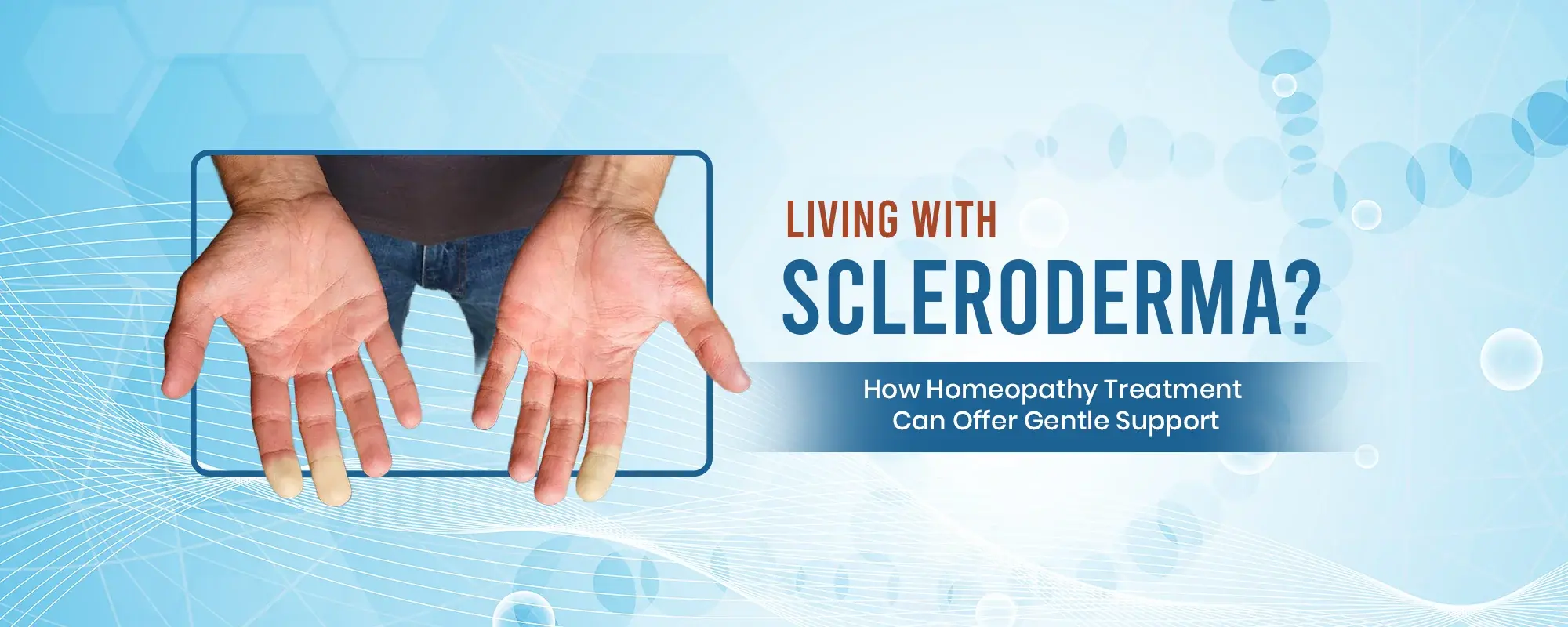
Raynaud’s phenomenon:
- Fingers or toes become cold, numb, or painful
- Skin may turn white, blue, or red, especially in cold or stress
Heart and lung symptoms (systemic cases):
- Shortness of breath or breathing difficulty
- Reduced ability to exercise
- Dizziness or tiredness
When to see a doctor?
See a doctor immediately if you experience:
- Worsened skin tightening
- Persistent swelling and stiffness
- Worsening of Raynaud’s symptoms
- Digestive troubles
- Respiratory difficulties
- General weakness or severe fatigue
What are the complications of Scleroderma?
Scleroderma can cause mild to serious complications. The various complications of scleroderma can affect:
- Joints: Tight skin over joints restricts movement and flexibility.
- Fingertips: Severe Raynaud’s can cause sores, pits, or tissue death.
- Kidneys: Sudden high blood pressure can lead to kidney failure (renal crisis).
- Nerves: Numbness, tingling, or burning in hands, feet, and limbs, sometimes leading to sores.
- Teeth/Face: Tight facial skin can make oral care difficult and increase tooth decay.
- Digestive system: Heartburn, swallowing problems, bloating, diarrhea, constipation, and nutrient absorption issues.
- Bones: Increased risk of osteoporosis.
- Hormones: Can cause underactive thyroid or erectile dysfunction.
- Pregnancy: Higher risk of preterm birth or low birth weight.
- Lungs: Scarring and high blood pressure reduce breathing and exercise tolerance.
- Mental health: Increased risk of depression.
How Is Scleroderma Diagnosed?
Scleroderma is diagnosed through a combination of a physical examination and medical tests. Because the condition can affect many parts of the body, diagnosis may take time.
A healthcare provider will first examine your skin, joints, and overall health. You may be referred to a rheumatologist, a specialist in autoimmune conditions. They will ask about your symptoms, when they started, and if anything makes them worse.
There is no single test for scleroderma. Doctors use a process called differential diagnosis to rule out other conditions. Common tests include:
- Blood tests to check immune system activity and antibodies
- Pulmonary function tests to assess lung involvement
- Skin or tissue biopsy to examine affected areas
- Endoscopy if digestive symptoms are present
Imaging and heart tests may also be needed, such as:
- Electrocardiogram (ECG)
- Echocardiogram
- Chest X-ray
- CT scan
These tests help determine how the condition is affecting the skin and internal organs. Early and accurate diagnosis allows better planning of care and symptom management.
What are the Conventional Treatment Options for Scleroderma
There is no cure for Scleroderma. Treatment focuses on managing symptoms and preventing complications. Doctors usually suggest a combination of approaches depending on which parts of the body are affected.
Skin care is important. Creams and moisturizers can prevent dryness and ease tightness. Medicines may suppress the immune system or target specific problems, like blood pressure, digestion, or pain.
Physical therapy helps improve movement and maintain strength. Light therapy can reduce skin thickening. In severe cases, stem cell or organ transplants may be considered to replace damaged cells or organs.
Homeopathy treatment for Scleroderma
Homeopathic treatment is being used widely by many individuals today. When combined with conventional treatment, homeopathy may help with scleroderma management. It is a holistic and gentle approach to managing scleroderma.
Homeopathy for scleroderma looks beyond skin changes and focuses on the person as a whole. Treatment is planned based on symptoms, disease pattern, and overall health.
Homeopathic care aims to support immune balance and regulate excess collagen formation. It may help improve skin flexibility and support better blood circulation. Many people seek it to manage stiffness, pain, and ongoing fatigue.
Homeopathy is gentle and non-invasive. Remedies are natural and chosen to support the body’s self-healing ability. Treatment plans are always personalised.
Note: Homeopathic treatment should always be taken under the supervision of a qualified homeopathic doctor. Do not self-medicate.
What are the homeopathic remedies for scleroderma?
Homeopathic remedies for Scleroderma are selected based on individual symptoms and overall health. Each remedy targets specific skin, joint, or systemic concerns. Hence, homeopathic remedies must be taken only when prescribed by a homeopathic doctor.
The various homeopathic treatments for scleroderma include:
- Fluoric Acid: This remedy helps reduce thickened and hardened skin. It supports collagen balance in affected areas. It also improves skin softness and flexibility.
- Arsenicum Album: It helps burn pain and dry, scaly skin. This remedy also calms skin irritation and inflammation. Additionally, it supports immune balance in chronic conditions. It is also useful for restlessness and digestive discomfort
- Silicea: It helps heal skin ulcers and damaged skin. It reduces dryness, roughness, and fibrosis. It strengthens weak connective tissues. It is also useful when hands and feet feel cold or weak
- Rhus Toxicodendron: It relieves joint stiffness and inflammation. It also improves mobility and flexibility. This remedy is also helpful when movement feels painful or restricted.
- Calcarea Fluorica: It helps improve skin elasticity and flexibility. It reduces excessive hardening of the skin and tissues. This remedy supports stronger connective tissues over time.
- Calcarea Carbonica: It is helpful for people who are sensitive to cold. It supports those with excessive tendencies to gain weight. This remedy helps improve overall tissue strength.
- Thuja Occidentalis: It helps reduce hardening and thickening of the skin. It relieves muscular stiffness. This remedy is useful for painful joints.
- Sulfur: It helps relieve itching, burning, and skin dryness. It supports skin health in long-standing conditions. This remedy is useful when digestive disturbances are present.
Managing Scleroderma with Homeopathy at Dr. Care Homeopathy
At Dr. Care Homeopathy, we help manage scleroderma through a personalized approach. Our team of skilled doctors provides treatments focusing on the root cause of the condition, not just visible skin changes. Care plans are designed after understanding symptoms, disease patterns, and overall health.
Homeopathic treatment aims to support immune balance, improve tissue health, and manage excess collagen formation. It helps address long-term concerns such as skin tightness, stiffness, pain, fatigue, and circulation issues. The approach supports the body’s natural healing ability.
Our doctors have years of experience in treating conditions holistically. With over 22 years of experience in holistic healing, Dr. Care Homeopathy provides long-term support for managing chronic conditions like scleroderma, without harsh side effects.
How to live with scleroderma?
Scleroderma can impact your life significantly. However, by following the treatment plan provided by your doctor and taking care through lifestyle changes can help manage it. To manage your scleroderma symptoms, you can follow some simple measures such as:
- Following a healthy diet, speak to your doctor about it
- Maintain a healthy exercise routine
- Drink lots of fluids and water for hydration
- Protect your skin by using sunscreen and wearing comfortable clothes
- Follow your medicine routine properly
- Avoid alcohol and smoking
- Take proper rest
- Avoid stress; if required, seek therapy
Conclusion
Scleroderma is a long-term autoimmune condition. It can affect the skin, joints, and internal organs. Symptoms vary from person to person. Early diagnosis and timely care are important. With the right treatment plan, many people are able to manage symptoms and maintain a better quality of life.
At Dr. Care Homeopathy, scleroderma is managed with a personalised and holistic approach. Treatment focuses on the root cause, not just skin changes. With over 22 years of experience in holistic healing. Our team provides gentle, natural, and long-term support.
Frequently Asked Questions
- How does Dr. Care Homeopathy help with Scleroderma?
At Dr. Care Homeopathy, our homeopathic doctors carefully look at your symptoms and overall health to customize personalized treatment plans. With years of experience, our doctors target the root cause of health conditions.
- Is Scleroderma curable?
Unfortunately, scleroderma is not curable. But, with the right care and treatments, scleroderma can be effectively managed.
- When should I see a doctor?
See a doctor immediately if you experience your scleroderma symptoms becoming worse. If you experience severe breathing problems or chest pain, seek medical help.
- Is there any way to prevent scleroderma?
Since the exact causes of scleroderma are not known, there is no definitive way to prevent it.